

Conveyancing fees and costs
Hidden Costs That Can Increase Your Conveyancing Quote in New Zealand
One of the first questions people ask when buying or selling a property is:
“How much will the legal fees be?”
It’s a fair question.
After all, you’ve probably budgeted for your deposit, moving costs, insurance, valuation fees and maybe even a few new pieces of furniture. Naturally, you want to know what your lawyer is going to cost as well.
The problem is that many people compare conveyancing quotes purely on price.
One firm quotes $1,450.
Another quotes $1,850.
A third advertises a fixed fee that looks even cheaper.
At first glance, it seems like an easy decision.
But conveyancing quotes aren’t always comparing the same thing.
Why clients choose Quay Law
A GOOD CONVEYANCING QUOTE ISN’T BASED ON GUESSWORK.
It’s based on understanding your circumstances.
Some include more work than others. Some separate disbursements from professional fees. Others assume your transaction will be straightforward, only for additional work to become necessary once the process begins.
That can leave buyers and sellers wondering whether the original quote was ever realistic.
In most cases, it was.
The reality is that property transactions don’t always unfold exactly as expected. A title might reveal an easement that requires further investigation. A bank may ask for additional documentation before releasing funds. A LIM report could identify an issue that needs legal advice, or you may decide to purchase through a trust after the quote has already been prepared.
None of these situations are unusual.
They simply involve additional legal work that couldn’t reasonably have been anticipated when the original quote was prepared.
At Quay Law, we believe one of the best ways to avoid unexpected surprises is to have a conversation before preparing your quote. By understanding your property, your finance and your circumstances from the beginning, we can provide a more accurate estimate and explain what is, and isn’t, included.
If you’re comparing conveyancing quotes, here’s what you should know before making your decision.
While every property transaction is different, most straightforward residential conveyancing falls within a fairly predictable range.
As a general guide:
| Transaction | Typical Legal Fees* |
|---|---|
| Buying a residential property | ≈ $1,400 – $2,000 |
| Selling a residential property | ≈ $1,300 – $1,800 |
| More complex matters involving trusts, companies, refinancing, overseas parties or relationship property | ≈ $2,000 – $3,500+ |
*Figures are indicative only and current as at July 2026. They exclude GST, disbursements and any additional legal work unless specifically stated. Every transaction is different, and legal fees will vary depending on the circumstances and complexity involved.
One misconception we hear quite often is that the value of the property determines the legal fee.
In reality, that’s rarely the primary driver.
Buying a $700,000 home generally involves much the same legal process as buying a $1.5 million home. What usually affects the cost isn’t the purchase price itself. It’s the amount of legal work required behind the scenes.
A simple purchase involving one buyer, one lender and a straightforward freehold title will usually involve considerably less work than a purchase through a family trust, using KiwiSaver, multiple borrowers and a more complex title.
It’s the work involved, rather than the value of the property, that generally has the greatest influence on legal fees.
A Quote Is Only as Good as the Information Behind It
Imagine two people request an online conveyancing quote.
The first simply writes:
“I’m buying a house.”
The second explains that they’re buying through a family trust, using KiwiSaver, have two borrowers, one guarantor and settlement is due in three weeks.
Although both people are buying a house, they’re describing very different transactions.
The legal work required is unlikely to be the same.
That’s one of the reasons we prefer to have a brief conversation before preparing a quote.
Rather than relying on assumptions, we’ll ask a few questions to better understand your circumstances. For example:
- Is this your first home?
- Will you be using KiwiSaver?
- Is the property being purchased personally, through a trust or by a company?
- Are there multiple borrowers or guarantors?
- Are any of the parties based overseas?
- Has finance already been approved?
Those answers help us prepare a quote that more accurately reflects the work involved. Just as importantly, they give you the opportunity to ask questions and understand exactly what is included before you engage us.
Our aim is simple. We want to provide a realistic estimate, explain anything that could influence your legal costs and reduce the likelihood of unexpected surprises later in the process.
Why Conveyancing Quotes Sometimes Change
A conveyancing quote is prepared using the information available at the time.
If everything proceeds exactly as expected, your final invoice may be very close to the original estimate.
However, property transactions rarely follow exactly the same path.
As the transaction progresses, new information can come to light or circumstances may change. For example:
- Your lender may request additional documentation before approving finance.
- The title may contain easements, covenants or rights of way that require further investigation.
- The Sale and Purchase Agreement may go through several rounds of negotiation.
- Settlement dates may change.
- Additional parties may become involved in the purchase.
- Reports may identify issues that require legal advice or further correspondence.
None of these situations necessarily indicate that something has gone wrong.
They simply involve work that couldn’t reasonably have been anticipated when the original quote was prepared.
That’s why it’s important to understand what your quote includes and how additional work will be handled if your transaction becomes more complex.
Sometimes the Property Itself Creates Additional Work
Every property has its own legal characteristics.
Some are relatively straightforward.
Others require much closer investigation before settlement.
Properties affected by easements, covenants, shared driveways, unit titles or rights of way often involve additional review to ensure you fully understand your legal rights and obligations before committing to the purchase.
Cross Lease Properties
Cross lease properties deserve particular attention.
While many proceed without issue, they often require a more detailed review than a standard freehold title.
Your lawyer will usually compare the flats plan with the current improvements on the property.
It’s not uncommon for previous owners to have added decks, garages, conservatories or extensions without updating the flats plan.
Where those differences exist, your lawyer can explain the legal implications and whether any further advice or action is recommended before settlement.
Sometimes the issue is relatively minor.
In other cases, it may affect finance approval, insurance or the property’s future resale value.
This additional investigation is one of the reasons some cross lease transactions involve more legal work than a straightforward freehold purchase.
Reports Can Uncover Issues That Nobody Expected
It’s common for buyers to arrange a LIM report or building inspection before making a purchase unconditional.
These reports provide valuable information about the property, but they can also uncover issues that weren’t obvious when you first viewed the home.
A LIM report might reveal flooding or natural hazard information, outstanding council requirements, drainage concerns or work that doesn’t appear to have the necessary consents. A building inspection may identify structural concerns, moisture issues or alterations that deserve further investigation.
Discovering these matters doesn’t necessarily mean you should walk away from the property. However, it often means your lawyer needs to spend additional time reviewing the reports, explaining the legal implications and helping you understand your options.
In some cases, your lawyer may negotiate amendments to the Sale and Purchase Agreement, request further information from the vendor or advise whether additional specialist reports should be obtained before you proceed.
Because these issues can’t usually be predicted when a quote is first prepared, they can sometimes result in additional legal work.
Your Finance Arrangements Can Influence the Work Involved
Not every property purchase is financed in the same way.
For some buyers, the legal work is relatively straightforward. For others, there are multiple organisations, lenders and funding sources that need to be coordinated before settlement can take place.
Some of the factors that can increase the amount of legal work include:
- Using KiwiSaver for your deposit.
- Applying for Kāinga Ora assistance (where applicable).
- Multiple borrowers or guarantors.
- More than one lender.
- Refinancing existing lending.
- Debt consolidation or restructuring finance.
Every lender has its own requirements and documentation.
Your lawyer is responsible for ensuring those requirements are met, preparing the necessary legal documents, liaising with the bank and making sure settlement funds are available on time.
While many of these matters are routine, they naturally involve more work than a standard transaction with one purchaser and one lender.
Buying Through a Trust or Company
Many New Zealanders purchase property through a family trust or company structure.
There are often good reasons for doing so, including asset protection, succession planning or investment purposes.
However, these ownership structures usually involve additional legal work.
For example, when purchasing through a trust, your lawyer may need to:
- Review the trust deed.
- Confirm the trustees have authority to purchase.
- Prepare trustee resolutions.
- Ensure the lending documentation aligns with the ownership structure.
Similarly, company purchases often require company resolutions, director approvals and additional documentation to satisfy lenders and legal requirements.
These aren’t unusual transactions, but they are typically more involved than purchasing property in your personal name.
Overseas Buyers and Overseas Parties
Where one of the buyers or sellers is based overseas, additional legal requirements often apply.
Documents may need to be witnessed or certified differently, identity verification can take longer and extra communication is sometimes required because of time zone differences or overseas legal processes.
In some circumstances, overseas purchasers may also need to consider the Overseas Investment Act.
Depending on the purchaser and the type of land involved, Overseas Investment Office (OIO) consent may be required before the transaction can proceed. Where this applies, the legal process becomes significantly more complex and additional timeframes and legal costs should be expected.
If you’re unsure whether these rules apply to your situation, it’s worth discussing this with your lawyer early in the process.
Delays Can Also Increase Legal Costs
Everyone hopes settlement proceeds exactly as planned.
Unfortunately, property transactions don’t always follow the original timetable.
Sometimes a bank isn’t ready.
A finance condition needs extending.
A purchaser requests more time.
The final inspection identifies work that hasn’t been completed.
The parties negotiate repairs or a settlement adjustment.
None of these situations are unusual, but each one creates additional correspondence, negotiations and documentation.
Your lawyer’s role is to protect your interests while keeping the transaction moving forward.
The more changes that occur, the more time is required behind the scenes.
That’s why settlement delays can sometimes affect the final legal costs, even though nobody intended them to happen.
Not Every Quote Includes the Same Things
| Cheap Quote | Personalised Quote |
|---|---|
| One price for everyone | Based on your transaction |
| May exclude extra work | Clear scope explained |
| Limited communication | Direct access to your lawyer |
| Unexpected extras | Upfront discussion |
| Basic paperwork | Practical legal advice |
One of the biggest mistakes people make when comparing conveyancing quotes is assuming every firm includes exactly the same services.
In reality, that’s rarely the case.
Some firms include reviewing the Sale and Purchase Agreement before you sign.
Others charge separately.
Some include communicating with your lender throughout the transaction.
Others treat that as additional work.
Some include KiwiSaver applications, while others price them separately.
That’s why it’s important to look beyond the headline figure.
A quote that appears cheaper at first glance may not include the same level of service or support as another quote that’s only a few hundred dollars more.
The better question isn’t simply “Which quote is cheapest?”
It’s “What exactly am I getting for this price?”
Understanding the Difference Between Legal Fees and Disbursements
One area that often causes confusion is the difference between a lawyer’s professional fees and disbursements.
Although they appear together on your invoice, they’re not the same thing.
Your legal fees cover the professional advice, legal expertise and work your lawyer carries out on your behalf. This includes reviewing documents, communicating with banks and other parties, preparing legal documentation, advising you on risks, managing settlement and ensuring your interests are protected throughout the transaction.
Disbursements, on the other hand, are costs paid to third parties while completing your transaction. These might include:
- Land Information New Zealand (LINZ) registration fees
- Title searches
- Certificate of title searches
- Electronic registration costs
- Company or trust searches where required
- Other government or third-party charges directly related to your transaction
Another cost that often raises questions is AML/CFT compliance.
Under New Zealand’s Anti-Money Laundering and Countering Financing of Terrorism legislation, lawyers are legally required to verify the identity of their clients and carry out certain due diligence checks before they can act.
Depending on the firm, these costs may include both third-party identity verification charges and the legal work involved in meeting the firm’s AML obligations. Some firms include these within their professional fees, while others list them separately.
Because every law firm structures its pricing differently, it’s always worth asking how these costs are treated when comparing quotes.
Before comparing quotes, ask:
Questions Worth Asking Before You Accept a Conveyancing Quote
Comparing conveyancing quotes isn’t just about finding the lowest price.
It’s about understanding what’s included and avoiding unexpected costs later.
Before engaging a lawyer, consider asking:
- Does the quoted fee include GST?
- Are disbursements included or charged separately?
- How are AML/CFT compliance costs treated?
- Will you review my Sale and Purchase Agreement before I sign it?
- Is assistance with KiwiSaver included?
- If I’m buying through a trust or company, is that covered?
- What happens if settlement is delayed?
- How will I be advised if additional work becomes necessary?
- Who will actually manage my file?
- Will I be dealing directly with a lawyer if I have questions?
A reputable law firm should be happy to answer these questions before you commit.
The clearer the answers are at the beginning, the fewer surprises there are likely to be later.
The Cheapest Quote Isn’t Always the Best Value
It’s understandable to compare legal quotes the same way you might compare insurance premiums or power companies.
However, conveyancing is a professional service, not a commodity.
Two firms may quote similar fees but provide very different levels of service.
One may include unlimited communication throughout the transaction, regular legal advice, document reviews, lender liaison and proactive guidance from start to finish.
Another may charge separately each time additional advice is required.
Equally important is understanding who will actually be handling your matter.
Will your file be managed by an experienced property lawyer?
Or will much of the work be delegated to junior staff with limited supervision?
For most people, buying or selling property is one of the largest financial commitments they’ll ever make.
Choosing a lawyer based solely on price can sometimes prove far more expensive if important issues are overlooked or additional charges arise because services you assumed were included were not.
Value isn’t simply about paying less.
It’s about knowing you’re receiving the advice, communication and support you need throughout one of life’s biggest transactions.
Why Quay Law Takes a Different Approach
At Quay Law, we believe a good conveyancing experience starts well before any documents are signed.
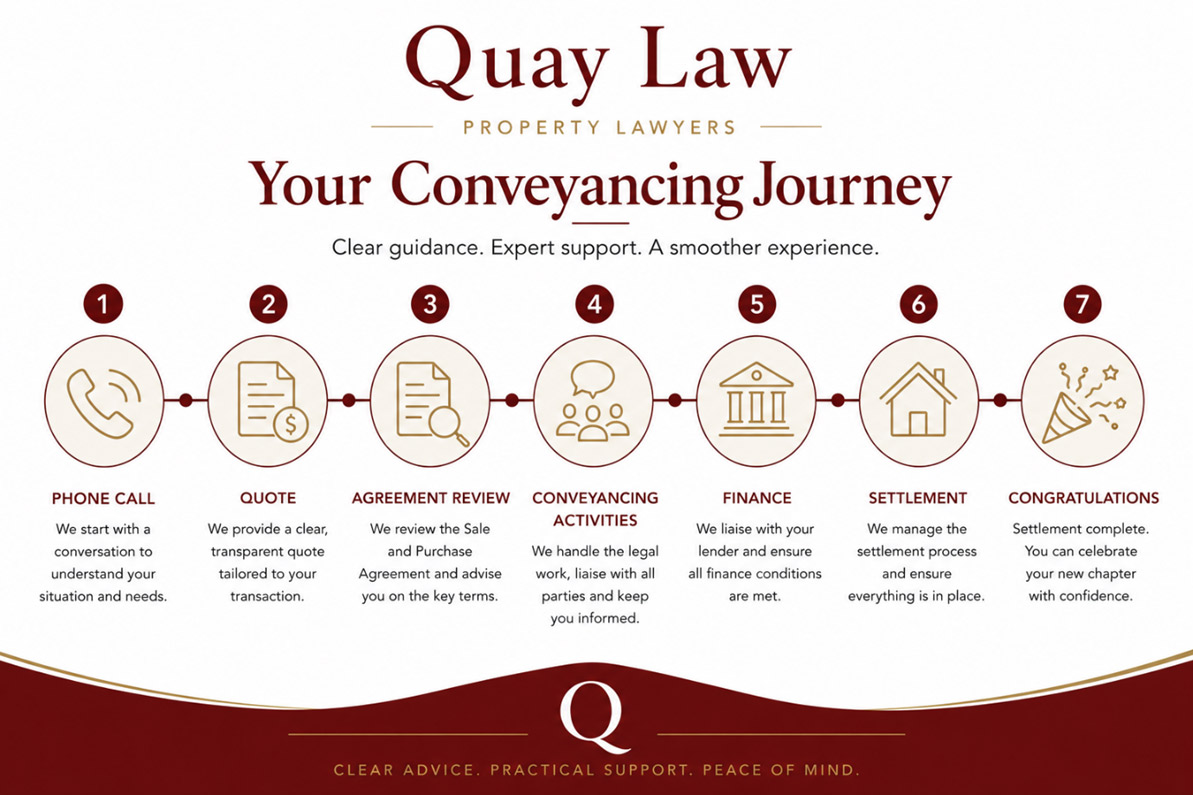
Rather than generating a quote based on a few online answers, we prefer to have a brief conversation with you first.
That conversation helps us understand your circumstances, identify anything that could affect the transaction and explain what is included in our fees before any work begins.
In many cases, a ten-minute phone call identifies issues that could otherwise result in unexpected costs or delays later.
Just as importantly, it gives you the opportunity to ask questions and understand the process before making any commitments.
Our goal isn’t simply to complete your transaction.
It’s to make sure you understand what’s happening, know what to expect and can move forward with confidence.
Final Thoughts
Most conveyancing transactions proceed smoothly from beginning to end.
When additional costs do arise, they’re usually not because anyone was trying to hide them. They’re simply the result of additional legal work becoming necessary as the transaction unfolds.
Every property is different.
Every buyer is different.
Every lender has its own requirements.
That’s why no two conveyancing matters are ever exactly the same.
Taking the time to understand what’s included in a quote, asking a few important questions and choosing a lawyer who takes the time to understand your circumstances can make the entire process considerably smoother.
At Quay Law, we believe clarity at the beginning leads to confidence throughout the transaction.
If you’re buying, selling or refinancing property anywhere in New Zealand, we’d be pleased to have a conversation about your circumstances and provide a clear, transparent quote tailored to your situation.
Unexpected costs when purchasing a property
Solicitors / Legal Conveyancing Fees and Costs. These would depend on the complexity of the property transaction.
The Deposit. This is dependent on your funding criteria for the property.
Mortgage Application Fee. This will vary according to how your loan is structured.
Property Valuation Report.
Property / Building Inspection Report. A professional pre-purchase inspection of a property before proceeding with a purchase is essential. This report should identify any items in the property that require attention. It is unlikely that a home will come through a property inspection with a clean report as maintenance on an existing home is always required. However, a property report allows you to make an informed decision prior to proceeding with the purchase of the property. Our Auckland conveyancing lawyers recommend you use a certified inspector for your potential property purchase. Please find below some suggested sources for qualified building professionals.
Accredited surveyors: http://www.boinz.org.nz/accreditation/
Accredited building surveyors: https://www.buildingsurveyors.co.nz/find-a-surveyor/
Mortgage Insurance. This provides you with insurance to cover you upon your death or for a major illness.
Home and Contents Insurance. You should cover your furniture whilst in transit, the house you have purchased and the household contents.
Relocation expenses. This may be on a fixed price contract or on a per hour basis.
LIM/PIM Reports (Land Information Memorandum/Project Information Memorandum)
Rates. A pro rata rates payment may be required.
Other Expenses. This article has been written as a guideline in order to highlight some of the costs that may be incurred when purchasing a home. This list is by no means complete as there will be additional expenses such as connection fees, phone, power, SKY or other property purchase related expenses.
Frequently Asked Questions
What is included in a conveyancing quote?
Many New Zealanders purchase property through a family trust or company structure.
There are often good reasons for doing so, including asset protection, succession planning or investment purposes.
However, these ownership structures usually involve additional legal work.
For example, when purchasing through a trust, your lawyer may need to:
- Review the trust deed.
- Confirm the trustees have authority to purchase.
- Prepare trustee resolutions.
- Ensure the lending documentation aligns with the ownership structure.
Similarly, company purchases often require company resolutions, director approvals and additional documentation to satisfy lenders and legal requirements.
These aren’t unusual transactions, but they are typically more involved than purchasing property in your personal name.
Why do conveyancing costs sometimes increase?
Additional costs usually arise because the transaction becomes more complex than originally anticipated. This could involve title issues, trust ownership, lender requirements, settlement delays, additional negotiations or legal advice arising from LIM reports or building inspections.
Are disbursements included in every quote?
Not necessarily. Some firms include certain disbursements within their quoted fee, while others itemise them separately. Asking for an itemised quote makes it much easier to compare one firm’s pricing with another.
What are disbursements?
Disbursements are payments made to third parties during your transaction. They commonly include LINZ registration fees, title searches, electronic registration costs and other government or service provider charges necessary to complete your conveyancing.
Why do lawyers charge AML fees?
Lawyers in New Zealand must comply with the Anti-Money Laundering and Countering Financing of Terrorism Act. This involves verifying client identities and completing legally required due diligence before acting. Depending on the firm, AML costs may include third-party verification charges, legal compliance work or both.
Does buying through a trust cost more?
It often does. Purchasing through a trust generally requires additional legal work, including reviewing the trust deed, preparing trustee resolutions and ensuring the ownership structure and lending arrangements are correctly documented.
Can a cross lease property increase legal costs?
Sometimes. Cross lease properties often require more detailed title reviews and may involve checking whether the flats plan accurately reflects the existing buildings. If discrepancies are identified, additional legal advice may be required before you proceed.
Should I choose the cheapest conveyancing quote?
Price is important, but it shouldn’t be the only consideration. Understanding what’s included, how additional work is charged and who will manage your transaction often provides a much better indication of overall value than the headline price alone.
Ready to Discuss Your Property Transaction?
Whether you’re buying your first home, selling an investment property or refinancing your mortgage, having the right legal advice from the outset can save both time and unnecessary stress.
If you’re looking for a clear, transparent conveyancing quote, we’d be happy to discuss your circumstances before preparing an estimate.
A short conversation today can help avoid misunderstandings tomorrow.